
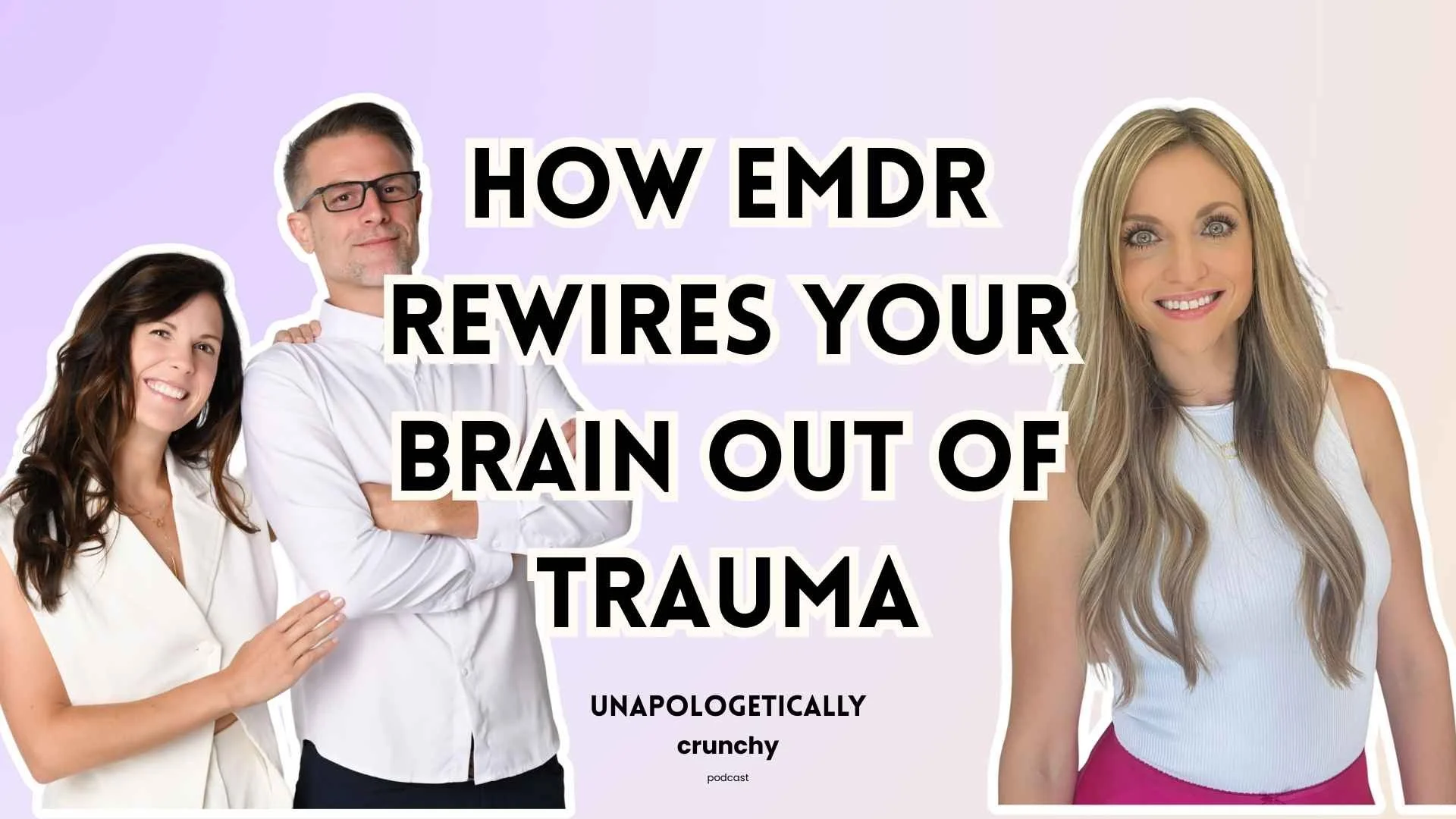
EMDR Therapy Explained: Eye Movements, Wild Dreams & Real Healing with Dana Carretta-Stein, The EMDR Coach
Episode #21
In this episode, we’re joined by Dana Carretta-Stein, a Certified EMDR Therapist and Licensed Mental Health Counselor. You may know her from Instagram as The EMDR Coach, and she’s also the founder of Peaceful Living Mental Health Counseling in Scarsdale, NY, where she’s built a thriving group practice specializing in EMDR therapy and trauma-informed care.
As an EMDRIA Approved Consultant, Dana also supports other therapists, helping them grow their confidence with EMDR and navigate their most complex cases.
She’s not only a total rockstar in the EMDR world, she’s also a wife and a mother. We’re thrilled to have her on the show!
Today, we’re diving into:
What EMDR actually is and the science behind it
How EMDR helps people heal…including children too
How to find the right therapist
The surprising role of dreams in the EMDR healing process
And we tackle some of the common misconceptions surrounding EMDR in a little game of “True or False”
You’ll also learn in this episode that I did EMDR myself which is what prompted us to invite an expert on the show. It was a really positive experience for me throughout my own healing journey and we thought it would be a great tool to share on the podcast in hopes it can be helpful for other people too.
Chapters
[01:37] Dana’s journey to becoming a therapist specializing in EMDR
[03:37] Discussing the inspiration to open up her practice, Peaceful Living Mental Health Counseling in Scarsdale, NY
[04:00] Dana is also is a EDMRIA consultant, we chat about the different levels to obtain training
[07:03] What exactly is EMDR? (Eye Movement Desensitization and Reprocessing)
[08:53] Discussing what bilateral stimulation and the role it plays in EMDR
[10:08] Different ways to do bilateral stimulation
[13:02] How long does it typically take to see results from EMDR?
[14:18] Dana is walking us through what to expect from a EMDR session
[15:20] How to identify a memory to work with during an EMDR session
[18:30] Can you do EMDR by yourself?
[20:13] Discussing how the nervous system influences our perspective
[20:45] Common sensations that patients feel while they move through a memory in an EMDR session
[21:20] Healing doesn’t have to make sense
[23:50] How to navigate the worries and fear to tackle trauma during EMDR session
[26:42] EDMR Intensives
[29:26] Clearing up EMDR myths with a game of True or False
[29:27] Is EMDR a form of hypnosis?
[30:56] You can do EMDR with a therapist over zoom?
[31:50] Are remote EMDR session just as effective as in person?
[32:36] Is EMDR talk therapy with the addition of eye movements?
[33:06] Is EMDR only for people who have struggled with PTSD ?
[33:38] Discussing trauma and the differences between eustress and distress
[34:09] What are some struggles that EMDR can help people with?
[35:08] Is EMDR and appropriate and effective therapy modality for children?
[39:19] The science of EMDR working inside the brain
[42:41] How does EMDR help regulate the nervous system
[46:34] Common signs that your nervous system is healing
[48:11] The positive side of having fear that helps us become more aware
[48:59] How to know if an EMDR patient is done reprocessing a memory
[56:11] Changing the way a memory affects you in the present moment
[57:29] EMDR aftercare protocol
[01:01:15] Vivid, intense dreams after EMDR therapy and how the brain in processing it
[01:04:50] Questions to ask when looking for a EMDR therapist
[01:07:56] Nervous system regulating beauty tips
[01:10:10] This or That: EMDR Edition
Mentions
Transcript
0:06 Welcome back to Unapologetically Crunchy. Welcome to our first video podcast. Today we're joined by Dana Coretta Stein. She is a certified EMDR therapist and a licensed mental health counselor. You may know her from Instagram is the EMDR coach, and she's also the founder of Peaceful Living Mental Health Counseling in Scarsdale, NY, where she's built a thriving group practice specializing in EMDR therapy and trauma informed care. 0:31 As an EMDRIA approved consultant, Dana also supports other therapists, helping them grow their confidence with EMDR and navigate their most complex cases. She's not only a total rock star in the EMDR world, guys, she's also a wife and she's a mother and we are so thrilled to have her on the show today. 0:48 Some of the things we're diving into today are what EMDR actually is and the science behind it, how EMDR helps people heal and children too, which is very interesting to me. How to find the right EMDR therapist. The surprising role of dreams in the EMDR healing process. 1:05 And we tackle some of the common misconceptions surrounding EMDR with a little game of truth or false. You'll also learn in this episode that I did EMDR myself and that is what prompted us to reach out to an expert in the field to, to share some information about this. This has been a really positive experience for me through my healing journey. 1:23 And so of course, anything that helps us, we want to share with you guys just in case it can help someone else too. So sit back, relax and enjoy the show. So welcome to the show. Thank you for having me. Thank you. So let's start off and with finding out a little bit about how you got into EMDR and therapy. 1:41 Yeah, for sure. So, so I graduated from grad school 2011 and then so I did like the internship and all that and then started in private practice in 2013 with my mentor Barbara Heffernan. And when I started in private practice, you know, as a brand new, like, baby therapist, and she was like, you should try the EMDR training. 2:04 And I, what is that? I've never even heard of it. They didn't teach about it in grad school. It wasn't something that was, you know, known about at that time. So I, you know, I was like, OK, yeah, sure. Signed up for the training and fell in love with it. It was because I was like, brand new as like a newbie therapist. 2:23 I didn't really get too ingrained in any therapeutic orientation yet. So I was really like a clean slate to build upon. And so when I did the training, it like I really took to it. It really made sense to me because it was, you know, kind of look at the whole person and not just focusing on their symptoms. 2:45 So, yeah, so like, I did the training and then the rest is kind of history. Here we are 12 years later. Yes, that's great. The things that I love about EMDR 2 is how it really gets to the root cause and focusing on the symptoms rather than, you know, not that any other type of therapy does, but just like in general, just trying to cover things up or anything like that. 3:07 Right. It's like putting a Band-Aid on it versus like, actually like figuring out what's going on. Right, exactly, yes, that's we always say like in this show throughout consistent throughout all of our episodes, it's always comes up about the root cause and how important it is to find that. Yes, I'm then that's something I'm so passionate about too, because that's how you really heal. 3:27 Like you can manage a symptom or you can heal it. Right, exactly. OK. And so that all brought you to open up your practice peaceful living. Yep. So I opened Peaceful Living, which is named after my dad. So my dad was Phillip Lewis. 3:43 So Peaceful Living. I took his initials and put that into the name of the practice because I really wanted to do something that honored him. He's a very big force in my life and he passed away in 2015. So how things kind of lined up where I always knew I wanted to have my own private practice, even when I was in grad school. 4:03 So when it was time to do that, I really was very intentional with what I wanted to name it because I wanted it to have something that has meaning. And so I named it after him with his initials. Yeah. And I started that in 2015. And you learn a lot from, you know, not just being a therapist, but being a business owner and the ups and downs that are associated with that. 4:27 Yeah. And here we are 10 years later. We just had our 10 year anniversary in September. Thank you. It was always very exciting. So yeah, 10 years later of peaceful living and we're just continuing to grow and we have like our mission, which is trying to get 1,000,000 people helped in 10 years. 4:46 That's our next 10 year target. Oh, I love that. That's amazing. That's so cool. And you are also you train EMDR therapist too, right? So I'm a consultant, there's trainers and EMDR is like a little like there's what is it like I think in pictures and I sometimes struggle to find the words to match, but like there's levels, right? 5:09 So you do the basic training, then you can become certified, then you become a consultant training, then you can become a consultant. And if you want to train others as well, you could do that too. So I'm not a trainer yet. Basically that just means I don't do the basic trainings. 5:27 But as a consultant, I work with EMDR therapist who need consultation, who need more experience practicing using EMDR and like really refining their skills. And that helps them be a better EMDR therapist that helps them integrate all what EMDR therapy is about into their daily practice. 5:50 Oh. That's so great. Yeah, that's wonderful. It's interesting. So I know you had a mentor that you mentioned that sort of brought you into this field. How do you find other therapists that might be interested or what drives them to be interested in going into this type of therapy? 6:06 Yeah, I mean, I think it's really now more, it's more popular, it's more mainstream. So you know, things like when Prince Harry came out and talked about how he did it and Lil John just did a whole thing about how he did EMDR. So I think that's how a lot of therapists are finding out about it. 6:23 Plus, it's more talked about in the field of, you know, this is a really groundbreaking approach that really helps people actually get results. So I think that's how people are really finding, you know, how to get trained in it. And then once they do the training, most EMDR therapists, when they first do the training, everybody's terrified. 6:42 They're like, oh, my God, I don't want to kill a client. And a lot of, like, the beginning of consultation is reassuring them that that's not going to happen and just kind of, yeah. And helping with the conceptualization of everything. I can totally see that because it is like your brain. Totally, totally and let's. 7:00 Back up for a second too, like just for any listeners that may never have heard of EMDR, can you explain what exactly it is? Absolutely. EMDR stands for Eye Movement Desensitization and Reprocessing. So the easiest way to explain it is that it focuses on what happened to you, not what's wrong with you. 7:22 And so they're the lingo free that EMDR uses is adaptive information processing. And that basically looks at, you know, your symptoms that you struggle with, How are they actually adaptive? How are your symptoms, solutions and solutions to what? 7:40 What was going on in your life that your nervous system had to adapt in that way in order to survive? Right. So when you can really zoom out and see that whole picture of symptoms as solutions, then you can really say, well, I'm curious what happened to you that those symptoms came to be? 7:59 And that trauma informed approach really helps kind of understand the entire picture of someone's inner experience. That's cool. I love, you know, symptoms as solutions. And we see that in, you know, whoever we're talking to, whether it's a chiropractor or somebody else, you know, your body's always trying to protect you and keep you alive, right, And make you keep going. 8:20 So when you have a symptom, it's your body speaking out to you. And it's the same in this field as well. Yeah. Yeah. I mean, we all learned in like 6th grade science, right, about homeostasis. Like the system is always trying to find balance. And that's what our nervous systems do. It's they're always trying to find balance. 8:37 And so we can kind of say, OK, well, how is this symptom the answer to something that was going on? Right. Right, right. And so I think a lot of people are always like, what is, you know, what do you do with the eyes and the eye movement? 8:53 What exactly does the bilateral simulation do and how does that work? So there's a lot of different theories on what the bilateral does. So like the kind of older understanding of it, was it integrating the left and the right hemispheres? 9:09 Because bilateral, you know, the left side of your brain, the right side of your body and vice versa. Now with some of the like newer research, it's all about taxing the working memory. So a lot of times when you have to do like two things at once, so to speak. So focus on this distressing experience while either tracking these high movements or feeling the tactile buzzers in your hand. 9:33 That kind of split attention helps decrease the intensity of the overwhelm of something. So instead of hyper focusing on it where you get overwhelmed and shut down, this gives a way to split your attention so that you can have an optimal level of arousal in order to reprocess a memory. 9:57 Wow, that's so interesting. Really is it's. So crazy. How the brain works like that and what are some what are some different ways that you do bilateral stimulation? Like. Eye movement, but there's different types of ways too. Yep, absolutely. 10:12 There's like eye movements are the traditional way, like what all the research was done on and that's tracking either left and right or diagonal up and down, what have you. The other ways, the more favorite way I've seen among clients are the tactile. So it could be if, if you don't have the fancy buzzers, I'm looking around my office to see where they are like these that I vibrate in each hand. 10:38 So this tends to be a favorite. If you don't have these, that's OK. A lot just people do tapping of, you know, tapping left and right, that type of physical simulation or auditory. So with having headphones and the, the sounds can alternate one side versus the next, but that helps with that maintaining that optimal level of arousal for reprocessing. 11:04 OK. And I don't know, I could be way half bass here, but you know, is binaural beats a form of that? Is literally thinking that, as you were saying, and I was going to say it's kind of like binaural beats, but I don't know, like if anyone could understand the context. But yes, it's very similar. Yeah, 'cause binaural beats is more like different frequencies in each ear. 11:24 And that helps again, with that like perfect frequency for you. That can help like fine tune your focus, your attention, what have you. Right, right. It's so crazy. I love that how that works. And do all clients respond? Do they? 11:40 Do all clients respond the same way to different types of ways that you do? Like bilateral, That's a great question. Yeah. It's just what are those days? What are those days? Everybody responds differently, so some people like the tactile, some people like eye movement. 11:59 I tend to have my own approach that I will tailor to each person depending on what works best for them. But I'll usually use the tactile for the resourcing the like stabilization parts and then do 2 modes of VLS. So I will do like tactile and eye movements when we start working on distressing experiences. 12:19 But that being said, some people who like maybe have difficulty focusing prefer just the tactile so they can close their eyes and really focus on their inner experience. So yeah, everybody responds differently, and that's the beauty of everyone's neuroscience and everyone's brain being magically unique. 12:37 Yeah, it probably varies upon the experience maybe too. Yeah, absolutely. Yeah, it sounds, I mean, I know what it is. It seems like it could be intimidating to some people maybe right and they get a little bit nervous about it. So I was wondering, typically out of the first session, would they have some sort of response, whether it's very mild or something significant either way? 12:58 Or does it take a few different times visiting to really start to see any effect from it? So what we do at our practice is we have like our proven process. So we will never, we say it's one to three sessions whenever you start to even before we even go near these, but near the buzzers, it takes our processes one to three sessions to really understand the nature of the symptoms and and what the goals for treatment are. 13:26 Then when we've determined OK, after that third session, we have an understanding of what the goal for therapy is. We've created a treatment plan. Then what I'll usually do is I'll say, OK, let's just see how these feel for you and I'll put them in their hand before we even do anything to say like this is what it feels like 'cause I'll usually get the what are you trying to electrocute me or what is this like those like funny things. 13:49 So we I'll introduce it in that way just so they can get familiar with it before we actually dive right in. OK, great. I know when she tried it, definitely the first session was had an impact, right. So we found it to be extremely exciting. 14:06 Yeah, it was. It is very exciting. And for someone too, who's thinking about doing EMDR, can you walk us through kind of like what an experience the experience would be like and what would happen as they go in for a session? Yeah. So I mean, the biggest thing that's important with when anyone is deciding if they should do EMDR is really they have to decide what they want to get out of it. 14:30 That's something I'm super passionate about because that everyone's experience will be uniquely different based on that. So then their first session will usually be, I always start with, after we've done those three sessions of really creating the treatment plan, I will always start with a resourcing stabilization exercise to promote, give tools like for emotion regulation, being able to create positive resources that might not be in that person's frame of reference, right? 15:03 So that when we start reprocessing distressing material, they have tools and resources to connect to that can help them in that moment. Without those things, we're just going to be going right into distress again, without any support system. 15:18 And that could be re traumatizing. Right. Yeah. And is it, is it through that process that you sort of identify what memory or, or what trauma it is that you're going to address? Because I'm sure people have tons right and a lot that we don't even know about. Yep, absolutely. 15:34 So the phase one of EMDR is the history taking process. But that being said, I, I, oh especially I do a lot of work with complex trauma and so even that can be very destabilizing for someone. So a lot of times we start first with resourcing to regulate the nervous system before we do the, the float back that we call it. 15:58 OK, now let's think of this symptom that you want to work on. Now let's close your eyes, notice the that symptom where you feel it and float back to an earlier time in your life where you had that same experience. And because there can be so many things that someone comes up with, we will do create like a, a list of potential targets. 16:22 And we go like, OK, now don't go into the details. I'm going to ask you to float back. Just if that memory were the name of a movie, what would it be called? And about how old were you? And I write that down. OK, now float back from there. And what would that be called? 16:39 So we make a list of potential targets and then from there we decide what's our, our reprocessing approach? Should we start with the like we call it the touchstone memory, which is like the core route, or should we start with something more recent? 16:58 Because for some people, going to the root right away might be way too destabilizing. So we do what's called the tip of the finger strategy where we start with something more recent, desensitize that first so that that individual has a a sense of how the process works without it being so overwhelming before we go back to the earlier. 17:20 But usually we can make that list of potentials and then we kind of phrase it as first, worst, most recent, OK and make a decision between therapist and client together about which what the approach will be. OK, that's really interesting because that's one thing too that was kind of even difficult for me. 17:41 Well, for one memory I knew, but then, you know, for different to kind of combat different things such as like, why do I, why am I an overthinker or, you know, why would me be a people pleaser or something like that? It was hard to identify the exact memory because I was like, here's some memories, but I don't like really know. 18:01 And so that's, you know, really interesting. That's a really nice sequence of events that you have to kind of get there. And I love how you make sure that they have the client has the tools that they need just because you don't know how you're going to react. That's the one thing too about EMDR is I've seen people, you know, they'll like on Reddit or something asking can I just do EMREMDR myself? 18:28 And it's like, no. 'Cause you do not. No, no, no, you're good. Yep. Because what I always the strongest. Person ever you don't know. Exactly. And like my favorite thing is when you know, someone calls and they're like, OK, I want EMDR for this memory. And I'm always like, that's cute that you think that's what the memory is because what human beings, right? 18:49 But what we are, and sometimes they're right, right? Sometimes that is what is feeding the present day disturbance. But what human beings are amazing at, And it's also our downfall is we love to assign a narrative. We love to say like, find the why. So we come up with this whole story that sounds great and it's totally logical and it is absolutely not true at all. 19:12 That's why with EMDR we do that float back, because when you start with the present, Yep. Yeah, and I I that literally did happen to me. So you're absolutely right. I went in there thinking, you know, I was in there for one thing. And then she was like, no, I think you need to tackle this first from after talking to me, you know, I was like, wait, what? 19:32 It was like, first get your safety. And I'm like, no, I'm safe. And she's like, no, you feel like you're safe now. But like, and explained it to me and I was like, it made total sense. I totally see what you're saying. Absolutely. And especially with like let's say there's some, that person is experiencing PTSD, so their nervous system is dysregulated. 19:52 So already they're not going to have a a narrative that is, I don't want to say true or not true, but is not, it might not be what's actually happening because story follows state. So how we perceive an experience is based on the state of our nervous system. 20:11 So if we come into therapy majorly dysregulated, we're going to name all of these things that we've perceived in this way. That's why we need to regulate first and then do that float back, because then we can find out what are those core touchstones. 20:27 Because if we don't regulate first, everything is going to be a target. Everything, right? That makes total sense. Yeah, it helps us kind of see the forest through the trees. Yeah, yeah. OK. So when you're going through the memories and you know you may have a client may have physical sensations, emotional sensations, what are some of the most common sensations that you see in clients when they're dealing with a traumatic memory? 20:54 It's a good question. I don't think that it is, yeah. I don't think there is a common one because everyone is uniquely different. And I think sometimes if we try to get into language of what's common, that will definitely keep somebody in the processing in that overthinking mode of like, is this normal? 21:14 Am I doing it right? Yes. Instead of just trusting the process, yeah. Right. Great. That's a great point. Yeah, 'cause I always tell clients it doesn't have to make sense. We don't have to ask the why, we just have to notice it. I know and that's why it's so hard for me 'cause I'm so literal. 21:32 Yes, I know. I feel that it has to make sense, right? But that's where like feeling is so interesting because a lot of times it needs to not make sense for us to be able to work through it. Like, we don't always have to understand the why because that logical part of our brain wants to come up with a why, wants to assign a narrative, but that keeps us out of feeling the feeling. 21:56 Right, your, your reaction to your, to your thoughts, your memories, whatever it is is that doesn't make sense either. See. Right, that makes total sense. Yeah, yeah. It's like it doesn't make sense, and that makes sense and that makes sense. Totally does. It totally does. And I, I actually do remember too, my therapist, she was like, no, like you're going in this part of your brain, stay in this part of the brain. 22:16 But I would ask her. Because I was, yeah, like, 'cause that's what we, we are hard wired to do that. And I'll explain to clients like, oh, when they this like shame comes out sometimes like, oh, I'm overthinking and I'm like, no, like that's we wouldn't have made it as far as a species if we didn't do that, right? 22:32 So even that ability to try to like to think and to figure out like that's just your brain doing what brains naturally do. So just notice that it drifted and we can bring it back. So we can bring it back without that element of like shame or like I'm doing it wrong or something like that. 22:48 Yes, we don't always have to judge ourselves so hard. Exactly. Yeah, exactly. And we say never judge, just get curious. Yeah, exactly. Yeah. And that, so that brings me to just another quick question is, you know, you say with desensitize that that part, right? And so in doing that, you're not you're not getting rid of in a memory, you're not getting rid of anything that's stored. 23:09 You're just changing the way that you deal with it and react to it, right? Is that sort of what you mean by desensitize? You like finding an even ground so that you can handle it and understand it and then move forward. You're decreasing the level of intensity, the amount of like control that that experience has over you. 23:27 So it's like when you feel like it's almost like a wave, if it completely knocks you down, you're making that memory more small little waves so that you can wade through it. Perfect. Yeah. And for somebody who like, you know, may think that they, they want to work on a particular memory and I know it could go another way. 23:47 But if they want to work in a particular memory, but they're, you know, thinking about doing EMDR, but they're really nervous and scared about how they could react. What would be some advice to give someone for that? I just faced that fear head on, like let's let's talk about those fears. 24:04 Like what could happen. That is so terrifying. And when we make space for someone's fear, like we don't want to jump in with reassurance, like no, it's going to be OK and stuff because that just suppresses their emotions and invalidates them instead of getting curious about what function those emotions are serving. 24:22 Right, which is funny you say that because that's something that I've been actually working on with my children is when they're like, I'm scared and sometimes they'll be no, you're OK, you're safe. And now I'm like, wait a minute. No, I can't tell them they're OK because. They don't feel OK in their body. Yeah, so. 24:38 Yeah, I do that with my kids all the time. Nothing will help you, like, figure things out more than parenting. Exactly. It's there's, I know, right. Overlap. Yeah, there's so much overlap with parenting and like doing trauma work and things like that because we're able to see how like our old ways of thinking, how that became a generational trauma almost because like, that's how like our our, you know, generations before us. 25:07 And then we're able to say like, OK, just being like, oh, it's going to be OK. That didn't help us. That kept us hijacked. Yeah. So instead of, you know, oh, what is it that's scaring you? What's the worst thing you can imagine? Right, exactly. You get them to that. Like, what would happen next? 25:24 Like my son, like, oh, the worst thing that could happen is that I would be scared. And then what? Because a lot of times it's not, it's not the emotion that's overwhelming for a lot of people, kids and adults included. It's being alone with the emotion that's really distracting. Yeah. 25:40 So I was telling my son, like mommy can't fix your feelings, but I could sit with you with them so you don't have to feel them alone. And that's exactly that's. Exactly why I was saying no, you're OK is the wrong thing to do in a lot of cases, yeah. Well, it's funny. It's just like I read this quote not that long ago and it was like our generation is, you know, we're trying to fix ourselves while we're trying to make sure that our children grow up with like regulated emotions, right, while dealing with our parents. 26:10 Yes, we're the only generation that's like healing generations right before us. And the ones like right after us. It's a very weird place to be, very weird place. It's so weird. Those are, like things it's like, hard to put words to, but you're just like, Oh my God. Totally. 26:28 Yeah. And and being stuck in the middle of the technology in progress there, it's like what? Are we supposed to? Do. Yeah, yeah. Exactly. So I'm curious, what do you think about intensive sessions of EMDR, like when you do like 3 hours at a time? 26:44 I think that they are absolutely wonderful, especially for people who don't really have the ability to do weekly therapy once a week. It's a way to really say like, OK, can you take 2-3 weeks off of work so we can dial in and focus and then process things out. 27:04 So I think that they're a really great way to help people still get the the outcome that they're seeking that might fit their lifestyle a little bit better. Because for a lot of people it is hard to just have like a weekly session and to be able to do that, it's, it's very difficult. 27:22 So instead of trying to do that it but it is a way to get results a little bit faster so you're not in therapy. Longer. Yeah, and I'm really glad you say that. Because that's what I did. Yeah. Yeah, absolutely. They're wonderful. They're absolutely wonderful. Yep. And my way of thinking too was I didn't want to get started and working on it and then stop, although I did. 27:43 I did have to for the first memory because it was a long time. I think the first memory that you're trying to process takes the longest usually. Is that true? It depends. It depends on which. If it's the first, worst, or most recent, It depends on where that memory lies on your target sequence plan, as we call it. 28:01 Right. Yeah, yes. So do you recommend, do you have a timeline like of how many, how often you should come in? Or is that sort of up to the patient to understand how they're feeling after a session and then come in when they're ready? Yeah, it's it really depends. Like for me, I don't do intensives just because my schedule doesn't really allow for it. 28:21 It's I just haven't really figured out how to create that with all of the other things I'm doing. Yeah, but I will tell. Clients. It's just me like right, I have all my clinicians here who are amazing and they do amazing work as well. 28:38 But we can like a lot of times we'll say like let's do those first three sessions in our proven process and then we can decide if, if there is like an intensive format that is better, we can see if we can create that. Like sometimes we'll do there's EMDR intensives and then there's doing EMDR intensively. 28:57 So maybe that's a 90 minute session as opposed to you know, a 45 minute session. So they're still doing like getting results faster, but it's not like every day for three hours, you know, in a two week period or something like that. 29:14 Right, that makes sense. All right, I want to play a little game. I love games. Let's do it, OK? True or false? OK, so true or false EMDR is a form of hypnosis. False. I know that's like a really common thing people ask. 29:31 Yes. They're like, what is this woo woo that you're doing? I'm like, I could explain the science. I love science. I have no problem explaining to it, I said. But do you really want me to do that or are you just scared and you don't want to keep going? Right. Yeah. Well, when that when people are doing this, do you fall into like a, a somewhat of a meditative state at all? 29:51 It gets you into, it's not hypnotized. We call it dual awareness. So it's the ability to have one foot in the present and 1 foot in the past at the same time. That's wild. Yeah. Super cool, Yeah. It's is it like a certain like brain state? 30:08 I think if you actually probably did the like, yeah, the electrodes that like tested the brain frequency and stuff, I'm totally guessing right now, but it would probably be in like a Theta state, which is like a more meditative state. But I haven't actually been able to like do that. 30:25 I would love to the science behind it, like stick electrodes on someone's end and be like, let's see what frequency you're at when you're processing. That would be very cool. I would love to put someone like on a functional MRI as we're processing so we could see that optimal level of like hippocampus and amygdala online at the same time. 30:42 Like, that would be very cool. But yeah, yeah, I don't even know if I answered your question completely because I want woo Hoo here on the science, but yeah. No, that was that was a crazy question. OK, OK, true or false? You can do EMDR from the comfort of your own home over Zoom. 31:02 I'm not going to say totally false because it you can do it. Whether or not you should is the question because there are companies there that like offer it. I don't recommend it, but I think that if it is really the only option someone has, I would then maybe get clearance first from an EMDR consultant or somebody to see if that is the best decision for you. 31:30 OK. And it just, it could probably depend on like the complexity of the trauma. Exactly. OK. That makes sense. For someone that you know does do it, would you say or someone that was able to do it remotely, would you say it is just as effective as in person? 31:46 Doing it remotely with a therapist or virtually on their own. No remotely with a therapist. Oh, remotely with a therapist, yes it it absolutely is as effective. That being said, everybody is different. So I have noticed that there are some individuals who, like we were doing MDR during COVID and stuff and I was actually doing MDR virtually before COVID even happened. 32:10 But I did notice that once things calm down after COVID and some individuals were able to come into the office, their progress picked up a lot. So there is something to be said, especially for individuals who have attachment trauma. There was something to be said for that those mirror neurons and that energy that takes place in a shared space. 32:29 Right. OK, that makes sense. Totally. Yep. OK, true or false? EMDR is talk therapy with the addition of eye movements. False. It's so false. Way more than that, right? Yeah, way more than that. And it's not a cognitive therapy. 32:45 I say all the time because a lot of times there's that, like it's all about your thoughts and stuff and it's not. It's about your nervous system and how the story, the state of your nervous system, impacts the story that you tell yourself. It's great. I'm glad you said that. Yeah, OK, True or false. 33:02 EMDR only works for people with specific traumas like car accidents, assaults, or traumatic military experiences. False. So false. Yep, it's like known for being the treatment for PTSD. However, the EMDR approach is you can link everything back to quote UN quote trauma and even the word trauma is just overused these days. 33:26 But any really distressing life experiences, right? Like, right, everyone's like, oh, my trauma, my trauma and I'm like, there's U stress, right? EUSTRESS, which is optimal levels of stress that help you build resilience over time. And then there's distress, which is when that stress response in your body exceeds your ability to cope and does not build resilience over time. 33:50 So EMDR works on the distress so that you can turn that the stress into you stress and build resilience. Perfect, you explained that so well. Thank you 10 years of practice. So what would you say, I know that what we just talked about like with the, you know, the kind of trauma that you would think of what, what are some other issues that EMDR could help out with? 34:18 Do you think like just somebody who's having a hard time with certain maybe like personality traits or something like that? So when you think of personality disorders, right, like individuals who are labeled with borderline personality disorder, narcissism, complex trauma is often mislabeled as personality. 34:39 So it's really, you know, temperament, it might not change your temperament. If you're just like a very like energetic person, it's not going to change that. But if you're a hyper vigilant person that you are thinking is your temperament, it will help that because it will make your hyper vigilance tempered so that you can be more intentional with that energy. 35:03 OK. Cool, awesome. And do you? So this is kind of a weird question. I don't know if this is going to make sense really, but is it ever appropriate for children to have EMDR? Like Oh my God, yeah. Oh yeah. Oh, so appropriate. 35:20 Love that question. We have two Rockstar child EMDR therapist in our office, Lauren and Stephanie. They are both killer. They're so good and it's it's amazing doing MD. I get like so excited about it because I started working with kids as a therapist. 35:37 So that's like where my like OG heart is. I just now have them so I can't do the schedule as much I love. That well, you're changing the whole trajectory of their life. So it's like so meaningful. It's amazing because when you start at, when you work with kids with MDR, they have less stuff to work through, right? 35:57 So it's very, it's much easier to create a target sequence plan, which is basically the present day triggers the past experiences that are feeding them and the desired future outcomes because they just have less experience as they're young. So it's easier. 36:15 Then it helps them build the foundation going forward on how to handle situations and thoughts. Absolutely. It helps them learn to tolerate distress, like to turn that distress into use stress. How? What would be the youngest person you would that would be able to handle it? 36:33 So they're the youngest that they'd be able to. I mean, you can handle it at any age. It's just what approach are you using? So if it's like someone 3 or younger where there is like PTSD, maybe there's a medical issue you're going to have. Actually, the approach with in the session is going to be a little different because the parent is going to be involved. 36:55 And then you'll do like with the parent and the child in session and be able to do these exercises that help with like there's like the lollipop game, which is about like attunement where imagine the lollipop is a bottle and you have to let mom know that you're you're full. 37:12 So what are you going to do? And like pushing it out and the mom responds to baby's cues there's and you do that with the bilateral like either in their hands or in their shoes or something like that. And that helps foster more attunement between parent and child. And so the reprocessing looks different there. 37:30 So you can do it with like as young as three. You can. Yeah. It's. Yeah, that's amazing. I never would have thought you could go to somebody that young and give that kind of support that's. Great. Yeah, it's, I mean, some of the coolest sessions I've had actually were with when I used to work with kids were were the kids on the spectrum because they actually have this beautiful ability to not get so jammed up in the narrative. 37:57 So when we do stabilization exercises and reprocessing, they can really get into it and visualize it and make it like I had one individual who made this whole like beautiful space of like the aroma room where it was like calming smells and there was a massage room where it created this whole calming safe place to access that felt sense of where regulation could happen. 38:25 Yeah, that's wonderful. It is so. Wonderful. I love. And do you remember the moment that you realized like, wow, this really works? I mean, I I have that moment every day. I still yeah all the. Time, right? Well, it it never stops amazing me how much it works. 38:44 It it's just it's it seems like magic and I know it's not magic because it's there's like scientific principles behind it, but every single day I have that moment of God damn shit really works. Like, it's so cool. It does. It does feel like magic too. 39:00 I. Think the nervous. System is magic, right I. Think absolutely, yeah. So it's absolutely. It's an amazing thing to witness. So when so EMDR is known for like reprocessing in the brain, how exactly does that work in the brain? 39:20 Do you know like the process that it that kind of goes through if that makes sense? Tell me a little more like like what changes happen in the brain? Yeah, like how? Like how does it kind of get a memory unstuck? So when memories get stuck in the first place, diagram here perfect. 39:43 So we need in order to encode experiences into memory, we need that optimal level of a puzzle that you stress, if you will. So in the brain we have like our limbic system is our amygdala and our hippocampus are all parts of the limbic system. 40:02 Now when we go through a stressful experience and there's a surge of adrenaline that can shut down the way the hippocampus primarily functions. So when you think of encoding a memory, you have the amygdala and the hippocampus. 1 gets the energy up and. 40:20 Gets to the activation level needed to transfer that into a memory. If the experience is so overwhelming and I forget what the chemical is, I don't know if it's adrenaline or if it's another chemical, so I don't want to misquote it. 40:37 But too much of it shuts down the hippocampus. So there's over activation, so that memory stays stuck in its raw state and it's just right. So anything happens in the present day that lights up again and again and again, and that creates that surge of too much energy. 40:55 So this stays down, this hippocampus stays down. So what EMDR does, and this is with the Phase 2, the stabilization stuff with reprocessing with dual attention creates that optimal level of that chemical so that now those experiences can be encoded into memory. 41:16 OK. So basically adjust the chemicals in the brain, in the nervous system to be able to tap into what the brain does naturally, your brain's natural healing ability. Right. Wow, it's so wild, the capabilities that our bodies and our brains. 41:33 Have it's just crazy, right? It's so. Crazy. I love it though. And it's so cool, yeah. And like the last like 2 years learning so much about neuroplasticity, I'm just like oh this is like a game changer. Right. It's a it like you can rewire your brain up until the day you die. 41:50 How freaking cool is that? Like, it's amazing. Yeah, it's like superhuman. It really is. It really is. It makes me feel so much gratitude too, because when you're younger and you don't realize things, it's so great that when you move on to different chapters of life, you can actually change things. 42:07 So. My grandma always said, my grandma Sally, she was my grandma and my dad were like these two huge forces in my life. And she always told me there's a certain wisdom that comes with age, that you have those experiences like you just described where you're able to like, all of a sudden see it and you look back. 42:24 I'm like, oh, wow. Yeah, yeah, you've gone. Through a lot of that lately. Yeah, yeah, yeah. That's the good thing about aging, right? With age comes wisdom. Exactly. And so with the nervous system, like, how does EMDR help regulate the nervous system, like especially for people who are living in fight or flight all the time, which used to be me? 42:44 Yeah, yeah. So when you think of the nervous system, it's not just your brain, it's your brain and your spinal column, right. And like the, all of the autonomic nervous system, parasympathetic nervous system, all of those. So think of like when you're feeling super anxious, what usually happens in your chest, right? 43:02 Your your heart starts racing really fast because the the brain perceived a danger and then sent a signal to the to activate the sympathetic nervous system to make your heart start beating really fast to give you enough energy to fight back or run away. 43:21 What EMDR does is able to like accurately assess using like I use the word discernment a lot to discern if that isn't actual threat in the present moment. And this all happens on an in an automatic way. 43:37 That's also to get to consciously think of so that your brain no longer perceives a present day experience as a threat. So then that sympathetic nervous system doesn't get activated, your heart just start racing and so forth. So it takes those present moments and stops them from becoming threats over and over again. 43:57 Yeah, it's just kind of realizing this happened to me, but this is not happening right now. And, you know, I just like trying to look at it from more of like a neutral point of view rather than like what was actually happening in that moment 'cause that moment's over. 44:14 Right, because the brain doesn't store memories as like categories of like these are all my 10 year old memories. The brain like neurons that fire together, wire together, so it creates memories based on association. So anytime there is a thread of association, like it could be the smell of like a Cologne that you smell in the present from like the checkout guy at like A&P or something. 44:39 That was the same Cologne that your father wore who used to abuse you. And all of a sudden your heart is racing and you're, you don't know why you're so dysregulated. And then we come up with a reason why, right? Really. Well, I'm, I'm anxious because like I, you know, I have my period or I have like I got my husband's being an asshole. 44:57 Like we come up with all these reasons, like we're so good at that. But really it's the, oh, there was a trigger. I didn't even notice. And that's a big part of EMDR is really unpacking those triggers first to create those moments of when that activation first took place, What was going on? 45:17 And then it's like a question and answer like, where were you? What did you see? What did you smell like? All of that because those those senses are what connect to those associations which then connect to distressing life experience that might be on process that triggers the whole nervous system to a. 45:34 Yeah, I hope it's funny you said that because I was just thinking triggers when you had started that. It's exactly it, so it sounds. Triggers work. Yep. Then it's, it's very much like it's mindfulness, right? Being able to kind of see what's coming in, observe it, not judge it and deal with it. 45:50 But you're doing it on a much deeper, more important level, but very similar. Because you can observe it. And the next part with EMDR is like Dan Sieglobi says, insight isn't always the answer. You insight that mindfulness is the first step, but then now that you know it, now you have to give yourself space in a therapy session to be able to feel the feelings that you did not get to feel in process, in relation to that experience. 46:18 It's like a completion process, right? So give yourself space, it processes it. And then that's how you know, OK, that's over now no longer get triggered a present moment. And are there any like signs that somebody could look out for to to know like, OK, after they do EMDR? 46:38 Oh, like signs that your nervous system is healing. Yeah. Kind of not getting those reactions I guess. Well, a lot of times I'll tell clients like, even though it seems counterintuitive, you know it's working when you start feeling worse first. Yeah. Because that's all of a sudden, you're actually like tapping into what's been ignored for so long. 46:58 And I'll always say that with like an asterisk because yes, you're going to feel more uncomfortable. However, that's why Phase 2 is so important, because you shouldn't be so uncomfortable in between sessions that you are completely decompensating and shutting down. That's why Phase 2 is so important because you're going to have that discomfort. 47:17 So here are the things to help in the moment when those things happen in between sessions. And that practice in between is also building up those emotion regulation skills to tolerate the distress that comes up in the session. It all works together. 47:32 Right, it's all connected. It's, I think it's really important to understand too, that it, it takes time and it's going to be hard and it's a big challenge because these are things that have built up over a long time. And it's, you know, similar to physical ailments that you may have after, you know, 20 years of eating fast food, right? 47:48 You can't just fix it overnight. It's going to take some time and some effort to get there. Absolutely, like I just said, right, right or like be scared and do it anyway, right, Like you bring. That's why I always tell my son, I'm like, it's OK to be scared. Don't let the fear stop you. Like fear is I was like give the description to clients that fear is a mobilizing energy. 48:09 It's actually really helpful when we can look at it as, how is it adaptive? Like my husband once was like, Oh my God, I have to go to this like neighborhood. He's a real estate agent. He's like, I have to go to this neighborhood that I'm a little concerned about. And I was like, good, I'm glad you're scared because that mobilizing energy is going to make sure you either fight back or run away. 48:27 So you come home to me alive. Yeah, right. If you have No Fear, you're going to walk into like a lion's den and get killed. Like so when we look at that fears adapters. So I'll tell my son it's OK to be scared. You can use that fear, that mobilization to discern if you need to fight back, run away, or learn that maybe that fear in that moment, like, OK, I can overcome that. 48:50 That's how we learn to tolerate emotions. Right, right. Exactly. Yeah, that makes total sense. And so after after somebody is kind of done reprocessing a memory, how do you know if they're done for sure? So we have rating scales built in. 49:08 When we do like the standard protocol, there's something called the Sud, subjective units of disturbance. So we'll say, well, now when we look back on that experience that we've been working, how much of a charge does it have to you now? 10 is the highest disturbance you can imagine, and 0 is none at all. The goal is to get to like a 0 or we call it like an ecological one where like who wouldn't be disturbed when they think about something that happened that was disturbing, right? 49:32 Right. So that's how we know that that past memory is done. And then from there, we have to desensitize the present day trigger and then install the future template. So when we work through the three prongs that and deer works on past, present and future, that's how you know you're done. 49:50 OK. I assume somebody could be a, a lifelong student of, of this type of therapy, right? I mean, there's always something that you could be working on and improving upon. Not really. That's where I'll challenge you. So like there's always going to be stuff that's challenging, but good therapy gives you the skills to tolerate it yourself and also say like, it's good enough. 50:16 It doesn't have to be this like there's always something to work on. This perfection is this is good enough. Like we all kind of get. Yeah, like it's always have something like, you know, I am a recovering perfectionist. So it was like, I'm very aware of how much of A trap it can be. 50:35 But it does get to the point where you can say like, you know, how much is enough. Right. So you've dealt with some things, you've learned the process, you've sort of rewired a little bit. And so that's enough. Now I'm good to move forward. Right. Well, now it's my system is regulated. 50:51 My nervous system is regulated enough so that when distressing things happen, I can handle it the way I want to handle it. And that's what the future template part of the MDR is all about. So when we work through the the cleared out the past, we desensitize present state triggers. 51:07 Future template is OK. Now imagine that trigger trigger happening in the future and then visualize yourself handling it the way that you ideally want to handle it. And it creates an experience, like a visual experience of handling it the way you want to handle it. 51:24 And the more you install those that the brain doesn't know the difference between if something's actually happening or if you're just imagining it. So even those you know, visualize yourself handling it the way handling it, that gives you the confidence so that when those things do happen in the future, you're like, OK, I've done this already. 51:42 Like my brain knows how to handle it this way. And it's not like riding a bike kind of just go back you you start riding it just like you practice. Right. It's so powerful, it's. Really powerful, right? I think so much of like what's helpful, I think for your listeners especially is not just, but like me, as the therapist says, how it works, but also what it felt like for you, right? 52:06 Right. Yeah, I say after, after she did the couple sessions, you could. I could tell like it was. You could see it physically. I could tell by the way she was thinking and talking. Yeah, sleeping right. There's definitely a profound impact after going through those. 52:23 Oh, absolutely, yeah. What was your like day-to-day like? I think that's probably like, because it's always a little moments that people don't realize are so impactful. Like how was your day-to-day different? Oh, you know I am not. I'm way more laid back about things like before about two years ago I started getting some health issues and I was like, I don't understand this. 52:49 I have been like a holistic crunchy person for like 20 years before it was even. Like a cool thing right before the term crunchy came to be, Yeah. And so I'm like, how did this happen? And, you know, I always felt like I handled stress so well because I powered through and worked through pressure. 53:06 Like now I've realized like, Hey, you weren't handling stress well in your body. And so that was I, I realized that my physical problems came from high cortisol. And so that became my journey of learning about the nervous system and regulation. And I always say, like, I'm kind of like a Guinea pig for, you know, Wellness things or anything to better myself. 53:28 And so EMDR I was really interested in doing for a long time and I finally did it. And there's three things that have made a very big out of like probably 15, three things that have made the biggest differences for me is EMDR and then somatic exercises and neurospinal analysis, which is like a a form of chiropractic. 53:51 Oh I might, what is it called? PDX or something like my chiropractor does it too. Or you could actually do the whole scan and see what's happening. If there's like like in C1 to C3, the vagus nerve, if it's in pitch, that's going to affect your nervous system as well. 54:07 Yeah. And not a lot of people know about that because it's not like, very common. But yeah, those three things have helped me so much. But yeah, it was all just trying to heal, bring the nervous system to a regulated state. Yeah, but you bring up such, you bring up such an important point, 'cause you feel like I was just good at managing stress, right? 54:29 And that's where I see a lot of people get stuck, especially these, you know, high functioning, high performers. They they perform so well because yes, they have adapted to being able to function with high levels of stress, but there's not enough decompression time. 54:47 So without that, without having moments to actually sit back and process, that cortisol level can't come down. Exactly. And reset itself to baseline. And nothing can change until you get that cortisol in your nervous system regulated either. 55:06 Exactly. It's just always going to be. Underlying, but another thing too is, you know, I've always been in kind of a chaotic environment. I have a very, very big family, and I lived in New York City, you know, for a while. I was just really liked chaos, I guess. 55:22 I never realized. That we prefer what is comfortable for us, even if we we know it's distressing. We will always choose comfort over what's best for us. Quote UN quote. Yeah, and it's, that's wild to me. Yeah. 55:38 But yeah, you have those moments, right? Of like, like I noticed it in my own journey too, of like, I am literally stepping in, doing things that are going to cause more stress. I'm like addicted to my own stress hormones. Yeah, Yep. It's so weird how that happens. It's just like kind of like what you're saying earlier, your body is just kind of looking for what's safe and instead of overcoming it, like that's what's safe. 56:01 Exactly, exactly. Yep. And they're a safety. Comes Wisdom. There you go. Yep, absolutely, absolutely. And so after after you go through the memory reprocessing, that is when you start to kind of figure out something to replace that memory with, right? 56:21 So it's, it depends on the 'cause you're not really like replacing a memory. You are changing the way that memory effects you in the present moment. In some cases, because there's, there are like more overt traumas and then there's traumas by omission. 56:43 So the things that didn't happen to you, but should have. So like a having a nurturing, caring figure to help you process an experience. So we might use more of an imaginal nurturing to quote UN quote, rewrite a memory of, you know, that thing that happened to you. 56:59 Can you let's invite that nurturing figure into that experience and imagine yourself having them with you. Go with that. So that will change the way the memory impacts you in the present because it's giving you something you never had before, Right? Right. 57:15 And that's, that's yeah. So we're not like changing memories, but we are changing the way they impact us. OK. Perfectly said. And is there anything that you do like? Any suggestions that you give like after EMDR just to kind of help support the whole process 'cause I know it still is. 57:34 There's still changes happening in your brain. After you're done, you're done with the therapy, you're done with the memory. Right. Yeah, I mean that's something I'm, you know, I give all my clients like this kind of like packet of like what to expect before after all of that time practicing all of the tools from phase two resourcing helps again with integrating the changes. 57:55 That are made in the brain. Like doing all that stuff and I tell clients even when they graduate because the goal like my clients when you come in and my goal is have you graduate, love you to death. However, I don't want you to need me forever because that's codependency. That's not therapy. So like the goal is to have you heal and then if you graduate and you like something feels, give me a call. 58:17 We can always have a tune up session or check in like I'm not going anywhere. So you could always reach back at you know, it's like figure things out on your own constantly. So just knowing that that resources there is helpful. Oh totally, and do you have any are you and something to do you ever do this like when I did my EMBI don't want to keep bringing it back to my EMVR because. 58:40 I know, no. I think it's helpful that you do though, because you have first hand experience of how it. Works, yeah. I was just wondering like for when after, after it, I, she was like, if you have any issues, you know, think about it like make sure you're aware of it and do kind of like the tapping. 58:58 And I did have to do that one night. I actually, because the issue that I was working on was safety. And I actually like went to bed that night. I put Roop Chakra music on. And. Fell asleep and woke up like something with that music or something like triggered something and I was like, Oh my gosh, like I felt like really weird. 59:18 And so I did that tapping and it helped. It brought me back down and I just like, I'm good, I'm safe, like everything's all good. Yeah, it helps with that integration. Yeah. We thought the butterfly hug is something we teach for clients to use in between sessions. So that's just this left, right tapping to help. 59:35 Yep. Like if you ever see kids sometimes, like if they're so they're upset, they kind of like go side to side on their feet and they sway that it's the same thing. We're just kind of reorienting or getting both hemispheres of our brain online to help stay present in that optimal level. 59:51 It kind of reminds me of two like we rock babies. Yeah, exactly. But you are going back and forth. Exactly. Exactly. Yeah. Awesome. And so is there OK, so this is definitely something that was is wild to me that I want to ask you about. 1:00:13 I know it's really common if you Google about after you have EMDR. A lot of people have very intensive vivid dreams. You did too. Yeah, yeah, yeah, big time. Yes, that is such a thing. And, and you could, you could remember them too. Like it was something that was there. 1:00:29 Like it was an intense dream that you did remember. Yes, well, for a little for longer than I would a normal dream. Like sometimes you know you, you wake up and you have a dream and you remember it and then like almost immediately forget it. This I would remember maybe for a couple hours, but I started. Writing it down. 1:00:44 But I mean, this was insane and I googled it and that's how I found out it was common. Do you know like your brain? What's your brain? What is your brain doing? Well, the eye movements really mimic rapid eye movement. That is what our brain does naturally when we sleep. 1:01:03 So rapid eye movement, REM sleep is really the dreaming phase of of our sleep. You know, there's REM sleep and then there's delta sleep where it's more like deep restorative where we don't remember dreams and stuff. So EMDR taps into that. 1:01:18 So because we are moving the eyes back and forth or doing bilateral it, you're doing more of it when you sleep. So you're actually processing things now that you didn't process before. So the vivid dreams are ways that your body's like we always say processing continues outside of the session because once we turn that mechanism on, it can keep going. 1:01:41 And so that's really how like your brain like downloads information, connects it to things like dreams are so interesting, they're not evidence based. However, when we unpack of like what the things in the dream symbolize and stuff, we can really see how it connects to what we were working on. 1:01:59 And it's your brain trying to come up with a story to digest that experience. Yeah, I thought that was wild because the first time and remember, I did the intensive therapy. So after the first one, I had dreams for maybe two nights and I don't even remember what they were. 1:02:17 Now this is like probably four months ago. And then after my second one is when I wrapped up that first memory and then also did another memory and I had, I mean, they just stopped. I've had dreams every night for like a month and 1/2. Wow. Yeah, and I had dreams. 1:02:32 You know, I don't usually. I think this is pretty common. I know people don't usually have dreams about like their parents or their husband, even their kids, because that's always so kind of weird because you're like, this is my life, why am I not having dreams about them? Right. I did I had like just neutral dreams about my parents. 1:02:48 Carl was in my dream is just like my like what he is in real life, like my husband, my teammate. I had a weird a couple weird ones with my about my kids and keeping them safe, which was interesting. But then, and I'm like, I'm sorry I already told you this, so don't get Jelly. I had no comments. 1:03:05 I had some ex boyfriends. Like people I never think, like, no offense, never think about, like don't care. About. And had dreams about them like multiple multiple dreams and I was like, this must be symbolizing something for me in my life I. Guess right? 1:03:21 Well, a lot of times they say who you dream of is not that person, but the art of yourself that it's it's representative of. So if it's, you know, like your husband comes up as you know he's your teammate and stuff, that's helping you connect with your own inner advisor of this person that you can trust. 1:03:42 And it's symbolizing that felt sense of safety that you have inside of you. It's awesome. I love that. I thought that was so interesting how that happened. And I love how you connected it with the R.E.M. 'Cause I didn't even think about that, but it's like makes total sense. 1:03:58 Yeah. I love that. I love that perspective, though not really who you're dreaming of. It's how you were at that time, like what you were going through, what you're, what you were as a person. Exactly, they usually say like someone you dream of is usually representative of a part of yourself. Yeah. 1:04:15 Got it. It's not about the boyfriends. No, I. Already said that. Yep, it's not about them. Carl feels a little better than that, though. A little better now. Definitely not. Oh my gosh, no offense to anybody listening out there, but those are what was I thinking moments. 1:04:33 We've all been there. We have all been there. We call it like it's a learning lesson, right? Yes. OK. So I just was wondering like maybe some good questions that somebody could ask an EMDR therapist when they're thinking of like trying the therapy? 1:04:49 Yeah, I love this question. I will always encourage people to ask more questions for the person. Do you have experience treating XYZ whatever that person is seeking like help for? So because there are different approaches with EMDR depending on what, what the symptom is or what the special population is like first responders, athletes, like all of that is really important. 1:05:17 So ask them what their what their background is helping for that specific issue and you know, special population that they might fall into. And you can always ask like, you know, do you have a process for how you do EMDR? Like, we have our proven process of five phases. 1:05:34 So, you know, how do you typically conduct EMDR? What is your process? You know, what things do I need to know before I get started? What are some things to help me outside of the session? Because there are people who say they do MDR therapy and, you know, without wanting to, like, push down some of my colleagues, they're people who don't really do it well. 1:05:58 Right. Yeah. So I think asking those questions are really helpful to making sure that they have like the right person and that's the right person for the right seat. You want the right EMDR therapist in that therapist chair to help you. So asking those questions make sure that they are the best person to help you on your journey. 1:06:17 I was wondering that too, because EMDR has gotten so much attention in the last few years, which I'm so happy about. But with anything, you know, people, kind of, some people kind of want to jump on the bandwagon. And so there's certain trainings you probably want your EMDR therapist to have, right? Right, right. 1:06:33 And sometimes it's not just about the training, but also like a, an understanding you want to actually assess, like how regulated your therapist is. You know, there are, there are some therapists I've seen who will take every training known to mankind because they're so hypervigilant and they want to learn, learn, learn, but they cannot regulate their own nervous system. 1:06:51 So their clients go nowhere. Right, that's good. Point. Do you do people have to do EMDR training or do they have to do EMDR during their training to kind of experience it? Yes. So there's in the MD approved basic training, which are the only ones I can speak to. 1:07:10 But those the element of it is there has to be 10 hours of consultation as part of the basic training. But also one of the things that you do in the sessions with your colleagues is they pair 2 therapists together to practice it on each other. 1:07:26 Oh, that's crazy. So. You know how it feels. Exactly. And they'll usually say, you know, don't pick like the biggest, like the touchstone. We don't want to work on those because we don't want to dysregulate anybody to the point that they can't stay attending in the training, but to pick like a, you know, something mildly uncomfortable so they can really get some experience of what it feels like. 1:07:49 Right. OK, that makes sense. Yeah. All right, awesome. OK, so all right, I just want to ask you some fun questions. OK, I love fun. So what is a nervous system ritual habit that you have that has to do with beauty? 1:08:07 That has to do with beauty. Tell me more like what? What constitutes as beauty? Maybe something like face massage or guasha or something like that. Well, one thing I do every night before bed. It's like part of my ritual. 1:08:23 I don't. Maybe it is resetting my nervous system without me even realizing. I wash my face every night to take my makeup off and that really gets my system ready for power down mode as I call it. Yeah, cold water too, right? Yeah, the biggest thing I do like beauty wise or whatever you wanna call it for nervous system health is exercise. 1:08:44 That to me is so impactful. You know, I met my husband in the gym. So it's something that, yeah, it's definitely something that we we are both passionate about because again, it's not, I don't give a crap what my body looks like and stuff. Movement is that that's that somatic element that helps us process things. 1:09:05 So, you know, that's how like, if I have a really like stressful day, I need to like, take a medicine ball and smash it on the floor to relieve that pressure that's built up inside my body. Right, yeah, it's getting that all that tension out. Absolutely. I think too, like even washing your face could be it's a regulating activity. 1:09:23 If you do it routinely every night and that's what it is, that sends you off into a better place before bed. It's the brain makes that association of this is the precursor to getting ready for bed. So that association your brain will start down shifting. 1:09:39 Right. Yeah, Yeah, that makes total sense. It's a sometimes it's a simple things. It doesn't have to be like something crazy or trendy. Or anything like that. No, not at all. Yeah, it's to be the simplest things that we're already doing. It's just noticing that that's the function it's serving. Exactly, awareness. 1:09:56 So that is probably the way. So that's probably what you do to regulate your nervous system pretty much. Is exercise the biggest thing? Exercise is definitely yes. Exercise is the biggest thing because without I'm a bitch. If I don't work out, I'll be the first to admit it, I am just like that. 1:10:14 That pressure lives inside of me and I need an outlet for it. So that is definitely a very big part of regulating myself. Totally. OK, let's play this or that EMDR edition. All right? OK. 1:10:30 Ice roller or heating pad. I'll see how that it depends. I would do a heating pad if I was in a state of hypo arousal so I needed to up regulate. I would do an ice pack if I was overactive and needed to calm down. 1:10:50 Yeah, I love that. Great way to put it. Somatic shaking or breath work. Somatic shaking. Candlelight or sunlight? Sunlight. Silk pillowcase or weighted blanket? 1:11:07 Me. Do the silk keeps my hair intact and the weighted blanket keeps me grouched. Morning meditation or night journaling? Morning meditation. 1:11:24 Red light therapy or blue light glasses? Both both serve different functions. The blue light protects my eyeballs like they're doing right now. The red light is helping to calm myself when I need it. Boundaries of family are skipping the gathering. 1:11:41 It depends on how the family reacts to your boundaries. A very good point. Very. Good. Big breakthroughs are slow and steady shifts. Slow and steady shifts, because I think there's the misconception that there's going to be this huge big breakthrough and that does happen, but it's not always. 1:12:01 It's usually the subtle shifts that you just have to pay attention to. Yeah, I I agree with that too, based on my own experience, totally, yeah. So where can everybody find you? So I am in Scarsdale, NY. That's where my practice is. 1:12:17 They can find me online by going to our group practice website, which is Peaceful Living, mental Health counseling.com. They can also find me on Instagram, TikTok, YouTube, at the under score, EMDR, under score Coach. That's where I put up lots of content about psycho education on EMDR, tips and tricks and things like that. 1:12:39 Yeah. So that's where everybody can find me and everyone in my practice as well. We have 7 clinicians here who are all EMDR trained and they're all equally amazing with their own specialties, eating disorders, athletes, children. So everyone here is more than equipped to. 1:12:57 Anybody who wants to get better wants to heal. Oh, I love that. And it's also good to be just have a little bit of a reminder for everybody. We're getting gearing or can't talk. We're gearing towards the holidays. And so it's just good for everybody, know everyone to know that this could be potential option that could help them get through the holidays with any triggers that they might do in. 1:13:18 Trigger season coming up. Yep, absolutely, absolutely. Yes, it is definitely high trigger season, Yeah. So some ways to help desensitize those triggers so you can function in the present moment. Yes, name dark and help with that. 100%. Yeah, I I really enjoy talking to you today, you know. 1:13:35 Thank you, I love talking to you guys. Yeah, it's, it's, it's somewhat new, but it's, it's so exciting. It is. Thank you so much for having me. I really appreciate it. Thanks so much for listening. If you'd like to follow along with us, you can find us on Instagram at Crunchypod and at Unapologetically Crunchy. 1:13:53 We have the same handles on Tiktok too. And check out our websites at crunchypod.com and unapologeticallycrunchy.com. And if you have some tips and tricks you'd like to share with us, feel free to DM us or contact us on the website. And one more thing, if you love our podcast, please consider sharing with every single person you know who would love it and leave us a review. 1:14:17 Oh, and you can tell them to read a review too. We are so beyond grateful for your support. Thank you so much. Peace, love and crunch.
-
Dana Carretta-Stein is a Licensed Mental Health Counselor and the founder of Peaceful Living Mental Health Counseling, PLLC and The EMDR Coach in Scarsdale, NY. A Certified EMDR Therapist and EMDRIA Approved Consultant, Dana is an expert in trauma-informed care in Westchester, NY. She is also a business coach for wellness practitioners, helping them build and grow thriving private practices. Dana is the author of The EMDR Therapy Progress Journal and The EMDR Coach Treatment Planning Workbook, as well as a proud wife, mother of two, and dedicated business owner.
👀 you can find Dana:
+ on the web danacarretta.com
+ on instagram @the_emdr_coach
+ on tiktok @the_emdr_coach
+ on YouTube @TheEMDRCoach
+ on facebook theemdrcoach
👀 you can find Peaceful Living:
+ on the web peacefullivingmentalhealthcounseling.com
+ on instagram @peacefullivingcounseling
👀 you can find us:
👀 watch → youtube
👂 listen on → spotify, apple podcasts, amazon music & iheartradio
🤩 follow along with us on our socials!
instagram → @crunchypod
facebook → crunchypod
tiktok → @crunchypod
youtube → @crunchypod
📝 on the web → crunchypod.com
🛍️ shop merch → unapologeticallycrunchy.com
☮️ peace, love + CRUNCH!
😜🙏💜